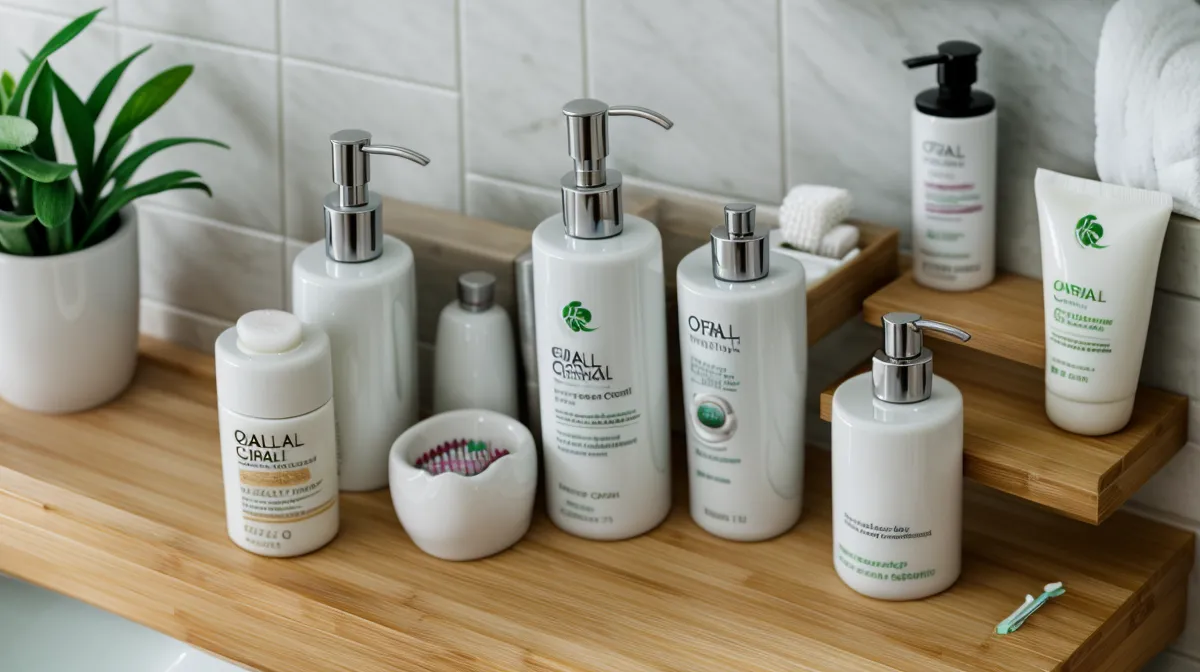
A coated tongue doesn't hurt. It just sits there, pale and faintly fuzzy, long after you've spat out the toothpaste, which is why I ignored mine for years, long before I'd connected the words oral microbiome to my own mouth. Tongue scraping never made my list between the flossing and the brushing, mostly because dental anxiety already used up whatever bandwidth I had left for home dental care. Once I finally picked up a scraper, what my toothbrush had been missing became impossible to unsee.
Quick disclosure before we go further: some of the links below are affiliate links, and if you buy through them I earn a small commission at no extra cost to you. I only mention gadgets and bottles I've actually used in my own bathroom: trust matters more to me than a commission check, especially when half of what I write about here is trying to keep people like me out of a dental chair.
The Film a Toothbrush Never Reaches
I already brushed for the full two minutes, the standard ADA recommendation, and flossed every night without fail, but that film on my tongue never actually left. Somewhere in my research I read that the tongue is basically prime real estate for halitosis, which is what finally got me to order a scraper instead of just another tube of toothpaste.
Before the scraper ever arrived, I'd already tried rinsing with straight hydrogen peroxide, undiluted, because a forum thread promised it would knock out anything nasty in one go. It burned my gums badly enough that I rinsed with plain water for a long stretch afterward and swore off home remedies I hadn't actually looked into first. At this point my dentist and I have the kind of relationship where he's probably wondering if I moved out of state, so that failure made me skeptical of the scraper too, at first, just another gadget and another chance to feel foolish in my own bathroom.
Plastic or Steel: Which One Can a Sensitive Gag Reflex Handle?
The first scraper I bought was a thick plastic one from the drugstore, the kind sold two-to-a-pack next to the mouthwash. It was tall enough that it hit the back of my throat almost immediately, and my gag reflex, which is aggressive on a good day, turned one attempt into a full minute of coughing over the sink.
Steel changed that completely. A thin, U-shaped stainless steel scraper takes up almost no vertical space, which turned out to be the entire problem with the plastic one. Exhaling fully before each swipe helped too, along with starting in the middle of my tongue instead of going straight for the back. Over time the gagging eased, the same way any exposure-based habit eases once your brain stops treating it like a threat. Plastic might work fine for someone whose gag reflex barely registers a toothbrush at the back of their mouth; steel is the one I'd hand to anyone whose reflex is more like mine.
Tongue Scraping Alone vs. a Fuller Oral Microbiome Routine
Scraping by itself only handles what's sitting on the surface, nothing more. It isn't remineralization, which is really about strengthening the enamel itself, and it isn't plaque control on the teeth, which lives on a completely different surface. What scraping does is clear the film, and for me that alone was enough to notice a real difference in how my own breath smelled to myself by midday, without anyone else in the room needing to tell me.
The oral microbiome doesn't stop existing just because the visible film is gone, though, and that's the gap a probiotic like ProDentim was meant to fill for me. The scraper clears out the overgrowth, and something still needs to help the mouth settle into a better balance afterward. I wrote separately about how I use ProDentim for dry mouth protection, since the saliva and dry mouth side of my anxiety turned out to be its own project entirely.
None of this touches gum inflammation, which I manage separately, or sensitivity management, which used to be its own daily annoyance before it quietly stopped being one. Bruxism is still a nightly issue no amount of tongue scraping will ever touch, and interdental cleaning stayed a completely separate step afterward, done with a different tool entirely, since a scraper was never built to reach between teeth. If anything, tongue scraping just became one more piece of the anxiety-routine-building I've done around my whole mouth, one small habit stacked on top of the others, none of them dramatic by themselves.
Biting into a cold apple slice on a bench in Washington Park, I braced for the familiar shooting pain cold used to bring. It didn't come. Nothing dramatic. No fireworks. Just an absence where I'd braced for a wince, and I sat there a second before finishing the apple.
A friend of mine spends her weekends competing in CrossFit opens, and she once told me her pre-competition routine looks a lot like my bathroom routine: the same repetition, the same small rituals that make an unpredictable thing feel survivable. Comparing notes with her helped more than I expected. Managing dental anxiety isn't so different from managing performance nerves: you don't erase the fear, you just build enough structure around it that it stops running the show.
Here's How I'd Choose Between Them
If your only complaint is morning breath and a slightly furry tongue, a steel scraper on its own is probably all you need: cheap, fast, done before your coffee finishes brewing. If the coated feeling keeps coming back within hours no matter how thoroughly you scraped, that's closer to where I ended up, which is when I'd look at adding something like a probiotic to the routine instead of scraping harder. I've also written more broadly about at-home dental gadgets for anyone whose routine needs more than a scraper can offer, and for anyone watching a budget while still wanting some support for gum health between checkups, BioDentex was the compromise that didn't feel like doing nothing.
Nothing here fixes dental anxiety outright: not completely, not for good. But it's one less reason for a dentist to find something, and some mornings that's genuinely enough. If you're curious whether a probiotic could fit into your own routine the way it fit into mine, you can check out ProDentim here.