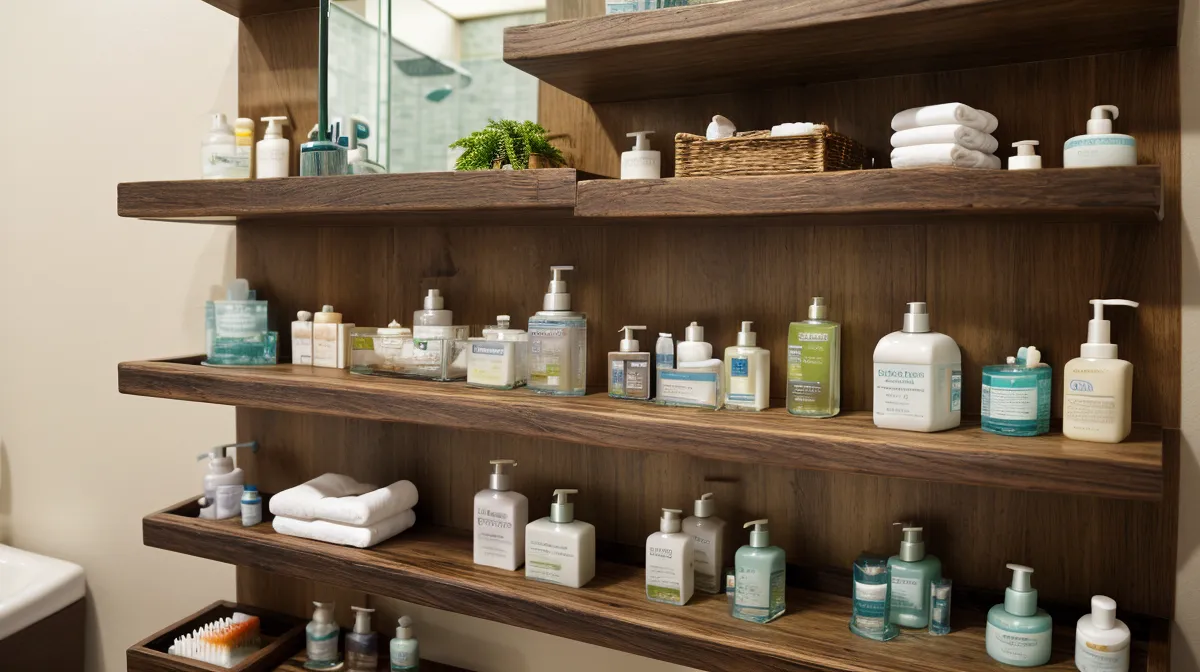
My tongue slides along my bottom teeth and finds nothing there: no rough patch, no fuzz, no quiet hum of worry underneath it. That's the entire measure of success when you live with dental anxiety: not a straight smile, not a clean bill of health from someone in a mask, just the absence of a very specific kind of dread. Home oral care, for me, was never really about oral care. It's a preventative-health project disguised as a bathroom shelf, and the oral microbiome is part of that story, though I try not to get too deep into the science of it these days. That's a rabbit hole for a different post.
Quick disclosure before you keep reading: some of the links below are affiliate links, and I earn a small commission if you buy through them, at no extra cost to you. I only mention things I've actually used during my own middle-of-the-night scrambles, because recommending something untested and being wrong about it is exactly the kind of responsibility my anxious brain cannot handle.
You don't build a kit like this overnight, and you don't build it because someone told you to enough times. Readers ask me constantly what's actually inside my emergency kit, so here's the honest inventory: the stuff that's proven itself, next to the things I tried once and quietly retired.
What Actually Goes Into a Dental Anxiety Emergency Kit?
Temporary filling material comes first: the kind meant to seal a lost filling for a day or two, not forever. I packed a lost filling shut with it during a grocery run through Denver Central Market once, ducked into the restroom for two minutes, and finished shopping like a normal person instead of spiraling in the parking lot. Dental wax sits next to it, for the sharp edge of a chipped tooth that would otherwise shred the inside of your cheek while you're too tense to hold your jaw naturally. Fluoride toothpaste, the ordinary kind any dentist would recommend, lives in there too; I've stopped obsessing over the exact number printed on the tube and just check that it says fluoride, full stop. And there's a strip of paper that tests saliva pH, which sounds nerdy until you realize it's an early-warning system: if my mouth swings acidic, that's my cue to drink water and back off the coffee before anything gets worse.
Home Oral Care Has to Work for a Nervous System, Not Just a Mouth
Anything that smells too clinical gets vetoed immediately, no matter how effective it's supposed to be. A sharp, medicinal scent can drop me straight back into a dentist's waiting room from decades ago, heart rate and all, and no amount of effectiveness is worth that trade. So the kit skews toward things that are boring in the best way: no strong mint blast, no antiseptic sting, nothing that reads as "hospital" to a brain that's already primed to panic. That might sound like an overreaction to someone without this particular fear, but you already know exactly what I mean if you're reading this.
Quincy, an old friend who will vanish into an hour of obsessive research the second something catches his interest, is the one who talked me into trying a saliva pH strip in the first place: he'd read something about hydration and enamel and wouldn't drop it until I actually tried one. That's the kind of credibility signal I trust more than a product page: someone who isn't selling anything, just being annoyingly thorough on my behalf.
The Products That Actually Earned a Spot
Not everything makes the cut, and one product I tried and regret is whitening strips, which left my teeth so sensitive that plain tap water made me wince for days afterward, and I threw out the rest of the box. That failure taught me to be suspicious of anything promising a fast, dramatic result. ProDentim earned its place the opposite way: slowly, without drama. It's a dissolvable probiotic, not a medicine, and instead of nuking everything in my mouth the way a stinging mouthwash used to, it's aimed at supporting the bacteria that are actually on my side. I won't turn this into a science lecture on the oral microbiome (not my concept to explain), but the short version is that killing every bacterium in your mouth isn't automatically a win.
ProDentim is worth a look if traditional products leave your mouth feeling raw before they leave it feeling clean, and I've written more about how it fits into an actual morning routine in my piece on how to remineralize teeth at home. It's become the one product in the kit I'd genuinely be annoyed to run out of, which says more than any five-star review could.
BioDentex sits in the backup drawer for the times my gums feel a little more reactive than usual, when I want extra support but don't feel like an emergency is brewing. BioDentex isn't the star of the kit, more like the understudy who's there when needed, and I've gone into more depth on whether BioDentex can help when a professional cleaning feels like too much to face right now.
Knowing When a Temporary Fix Isn't Enough Anymore
Buying time is all a kit like this is for; it's not a substitute for an actual professional when something is genuinely wrong. Swelling that spreads toward your jaw or neck, a fever, or pain that wakes you up over and over through the night are not "manage it at home" situations, full stop; those need a real phone call, however much your chest tightens at the thought of making it. What's in the kit stabilizes a bad night and gets you to morning. It doesn't make a real problem disappear if you just breathe through it long enough.
Is This Really So Different From Any Other Anxiety Coping Kit?
People manage all kinds of fear with a box of specific objects, and mine just happens to be about teeth. Someone with flight anxiety keeps a particular playlist and a strip of gum for their ears; someone who gets panic attacks in crowds keeps a grounding object in their pocket, something cold or textured to hold onto. My kit does the same job for a different trigger; it's less about the dental wax itself and more about the fact that having it within reach means one less unknown between me and a spiral.
A reader named Wren emailed me once, a while after a piece I wrote about years of avoiding the dentist, and she still checks in now and then with an update on her own kit, usually without me asking. The question she circles back to most is whether any of this actually reduces the fear itself, or just the physical risk of ignoring your teeth for too long. Honestly? Mostly the second one. The fear doesn't shrink just because your gums are healthier, but a healthier mouth means fewer nights where fear and an actual emergency collide at once.
Living With a Fear That Doesn't Fully Go Away
Driving past a dental office with one of those oversized tooth logos still makes me look the other way. I've gotten so good at it, it's basically a neck workout at this point. Nothing about building this kit turned me into someone who's suddenly fine with dental offices; it just gave me something to do with the fear besides sit in it. Between the kit and finding ProDentim for daily maintenance, I've landed on a version of agency that doesn't require pretending the fear isn't there.
None of this is a cure, and I'd be lying if I said the anxiety got solved instead of just managed day to day. If you want the longer version of how I got here, there's more in what I've written about what I learned after 10 years of avoiding the dentist. And if a bad night turns into something more than a bad night (real swelling, a fever, pain that won't quit), please call someone qualified. A kit is a bridge. It was never meant to be a replacement for a professional who can actually see what's going on in your mouth.