
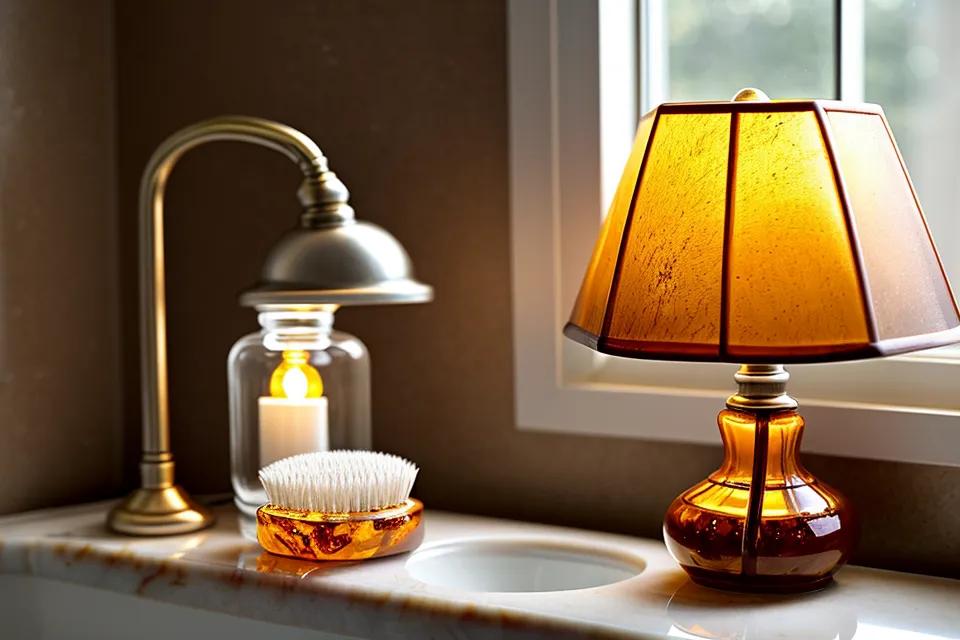
My hand finds the amber lamp before my eyes are even fully open, skipping the overhead switch out of pure habit, built one deliberate swap at a time, not something that just showed up on its own. Here's the thing nobody tells you about dental anxiety and home oral care: the fix usually isn't more willpower, it's a sensory-friendly redesign of the same five minutes, changing what your senses register the second you walk in, until brushing stops feeling like a countdown to something bad.
Quick disclosure before anything else — some of the links below are affiliate links, and if you buy through them I earn a small commission at no cost to you. I only mention things I've actually used trying to keep my own teeth intact without setting foot in a dental chair more than I have to. Full transparency, always.
The idea that gets repeated most in dental-anxiety spaces is that sensory-friendly adjustments are a nice bonus — mood lighting, a scented candle, maybe a soft towel — while the real work is grinding through the routine anyway. That's backwards. If a routine feels like an ordeal every single morning, you stop doing it consistently, and inconsistency is what actually lets small problems turn into root canals. The sensory stuff isn't decoration. It's the reason the routine happens at all.
The Myth That Willpower Is the Missing Piece
Eight years into managing this without a dentist doing the heavy lifting, I've tried nearly everything marketed as a fix, and the products that stuck were never the ones that demanded more discipline from me. One of the worst ideas I ever had was rinsing with hydrogen peroxide straight from the bottle, undiluted, because some forum thread swore it would reset my gums overnight. It didn't reset anything. It burned, my gums stung for the rest of the day, and I learned the hard way that "natural" and "gentle" are not the same word. Somewhere out there is a very confident forum poster who owes me an apology and possibly a new set of gums.
What actually worked was smaller and dumber-sounding than that: noticing which specific sensations set off the panic and removing them one at a time. Cold light. Sharp sound. Burning mint. Ice-cold water. None of those are willpower problems. They're triggers, and triggers respond to being changed, not powered through.
Why Cold, Clinical Light Reads Like a Warning
That flat, bluish-white light in most bathrooms is the same color temperature dental offices use so they can see every detail of your mouth. Standing under it to brush isn't neutral — it's the same visual cue your brain associates with someone about to find something wrong.
Swapping to a warm bulb sounds almost too simple to matter, and that's exactly why people skip it. It matters. My mornings got measurably calmer once the room stopped looking like an exam room, not because the light itself does anything special, but because it stopped cueing the same dread every single time.
The Noise Actually Matters, and It's Not an Excuse
It matters, and it isn't an excuse. An electric toothbrush's whine sits close enough to a drill's pitch that your nervous system doesn't always bother sorting out the difference — it just reacts. For a long stretch I switched to a manual brush purely to avoid that sound, and my gums paid for it because I wasn't being thorough enough.
A friend of mine who spends her weekends competing in CrossFit opens has a whole ritual for getting her head right before a workout that scares her — music, a specific warm-up, the same three deep breaths every time. Brushing turned out to need the same kind of ritual. Noise-canceling headphones and one playlist I only use for oral care did more for my consistency than any toothbrush upgrade ever did. It's worth saying plainly, though, that grinding your teeth at night is a separate issue from any of this, and if your jaw is sore in the morning that's worth looking at on its own.
Rethinking What "Clean" Is Supposed to Taste Like
Extreme mint was the other trigger nobody warned me about. That burning, artificial flavor reads to me exactly like the rinse in a dental office, which means every brush was a tiny trip back to being eight years old in that chair. I went through a stretch of trying every "natural" toothpaste on the shelf just to find something that didn't taste like a cleaning product, and most of them were a letdown.
The sensitivity management side of things took longer to sort out than the flavor did, and I've written separately about How I Treat Sensitive Teeth at Home Using BioDentex Daily for anyone dealing with that on top of the anxiety. I still keep BioDentex on the shelf for the spots that flare up under stress, and it doesn't carry any of that clinical smell that used to set me off. None of this replaces actual remineralization work your enamel needs over time, and it's not meant to explain how that process works. It's just what makes the daily routine tolerable enough to actually do.
The Probiotic That Made the Mornings Feel Less Like a Test
A good chunk of the fear was always the "what if" — what if I'm doing all of this and still getting cavities anyway. That question is what pushed me to look into the oral microbiome at all, not as a science project, just as one more lever that might lower the stakes a little.
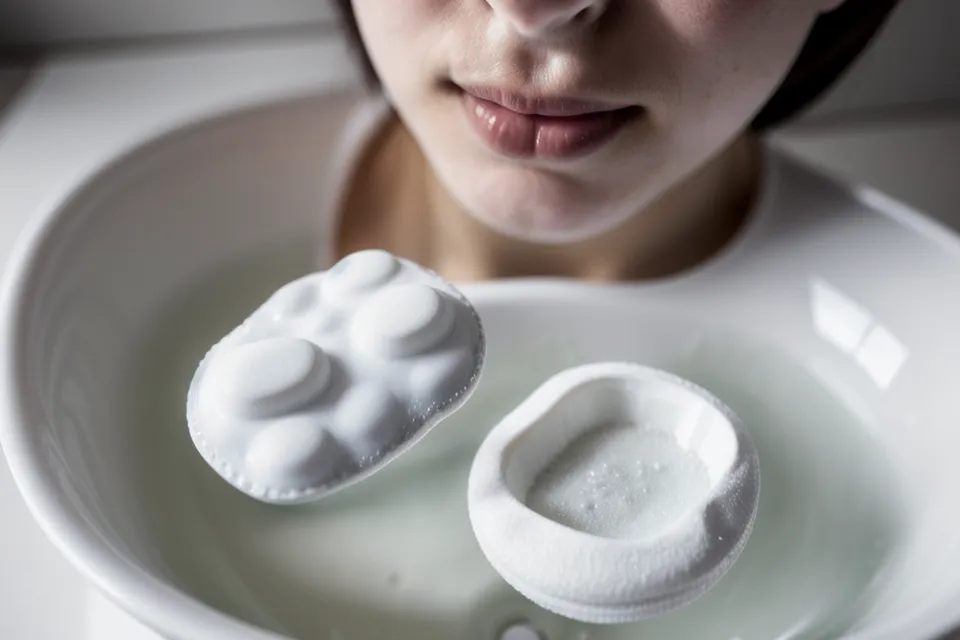
That's how ProDentim ended up in the routine — a dissolvable tablet, mild strawberry flavor, nothing that tastes remotely medicinal. Taking it after the brushing ritual rather than during it keeps it from feeling like one more clinical step. There's something reassuring about not needing a mouth that's already perfectly healed for it to help — gum inflammation and plain sensitivity are two different problems, and both showed up for me at different points. If dry mouth is part of your anxiety picture too, I go into that more in How I Use ProDentim to Manage Dry Mouth and Protect Teeth.
Change the Water Temperature Before You Change the Product
Flossing used to be the sensory low point of the entire routine — string cutting into my fingers, plastic picks that felt sharp for no reason, the whole thing over before I could settle into it. Switching to a water flosser helped, but the real fix was filling it with lukewarm water instead of cold, since cold water against sensitive teeth was its own kind of alarm bell.
Standing on a soft mat while the water runs warm is a form of proprioception — using what your body feels underfoot and in your hands to tell your brain it's safe, even when your mouth is doing something it doesn't fully trust yet. The copper tongue scraper I added later works the same way, oddly enough. It's heavier in the hand than I expected the first time I picked it up, and there's a faint coolness against the tongue that feels grounding instead of clinical. Interdental cleaning in general asks a lot of anyone with sensory sensitivities, and picking the right tool for it matters more than most guides admit.
What Belongs in the Bin for Bad Mornings
Even with every adjustment above, bad mornings still happen. Some days the anxiety spikes for no clear reason, and no amount of warm light or soft music touches it. For those mornings I keep a small bin with pre-pasted disposable brushes and an alcohol-free rinse, because doing the minimal version of the routine beats skipping it entirely — and skipping it is how plaque control quietly falls apart without you noticing. If you want the full list of every "how do you even survive this" question I get asked, I've answered them in Everything I Get Asked About Maintaining Oral Health with Severe Dental Phobia.
There was a morning when I pressed my tongue against my gumline, out of old habit, bracing the way I used to, and felt — nothing. No tenderness, no wince, just gums that had stopped announcing themselves. That's not a cure, and it's nowhere close to fixing the fear itself. But it's the kind of small, quiet proof that the sensory changes were doing something real, worth mentioning because moments like that are rare enough to notice.
None of this is about curing the fear — I'm not sure it ever fully goes away, and I've stopped expecting it to. What changes is whether the fear gets to run the whole morning. My home routine has better attendance than my actual dentist does, and that's less of a joke than I'd like it to be. On the hardest days I still walk a loop around City Park before I touch anything in that bathroom, the same way my CrossFit friend breathes through her warm-up before a workout that scares her — sometimes the body needs to settle before the mouth will cooperate at all.
If you're looking for one place to start, start with the sense that bothers you most, not the one an ad tells you to fix first. For me that meant a lightbulb and a bottle of mouthwash before I ever touched a toothbrush upgrade. If you want a gentler, less clinical-feeling option to support the routine once the triggers are handled, ProDentim is the one that's stayed on my shelf the longest — though it won't fix the fear by itself. I'm not a health professional and none of this is medical advice, just what's kept me out of that chair longer than I ever thought I'd manage.