Do you know that particular kind of dread, not the ache itself, but the fear that an ache is about to start? The tenderness that shows up out of nowhere in your gums, and that half-second where you're deciding if it's real or just your dental anxiety narrating a worst-case scenario? That's the exact feeling that sent me looking into essential oils for gum health in the first place, not as a wellness trend, but as a home remedy I reached for because the alternative was calling a dentist, and calling a dentist has never once gone smoothly for me.
Freelance design pays my bills, not dentistry, and I want that on the record before you take a single word of this as professional advice. I'm thirty-six, I've had two root canals I probably could have avoided, and most of what I know about oral care I picked up by being too scared to sit in a dentist's chair for the better part of a decade. None of that makes me an expert. It just makes me someone who has tried an embarrassing number of bottles, tinctures, and rinses to stay out of that chair.
If dental avoidance were a competitive sport, I'd have medaled by now, that's the joke I make so the whole thing feels lighter than it actually is. A reminder card from a dentist's office sat unopened on my kitchen counter for two weeks last spring, buried under mail I actually needed to deal with, until I finally recycled it without reading the date. Not a healthy system. Just my system.
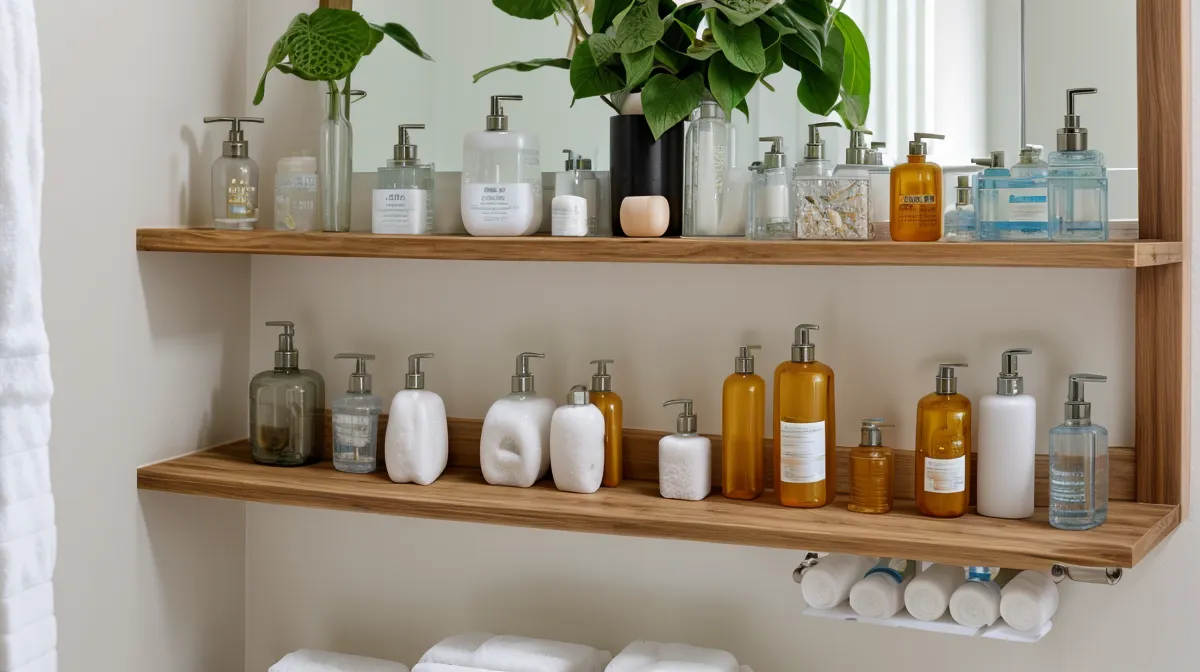
All of this happens in my bathroom in Capitol Hill, which by now looks less like a bathroom and more like a badly organized apothecary: brown glass bottles crowding the narrow window ledge, an old box of baking soda wedged in behind them that's been there longer than I can remember, and a row of toothpaste tubes that never quite match, all half-squeezed. The bulb overhead flickers a little whenever the building's heat clicks on, which feels about right for a room where I do most of my anxiety management.
The Essential Oils That Actually Earn a Spot in My Routine
Three oils show up again and again once you start researching this: clove, tea tree, and peppermint. Clove is the famous one, and it earns the reputation. It's rich in Eugenol, the same compound dentists themselves use for its numbing and antiseptic qualities, just in a far more sterile form than whatever's sitting in my bathroom cabinet.
Tea tree oil is the one I reach for most. Mixed into coconut oil, it has this earthy, almost medicinal smell that feels reassuring, like proof that something clinical is happening without an actual clinic involved. Peppermint does something different: it's less about pain relief and more about circulation, which makes it good for that heavy, swollen feeling gums get when they're inflamed. None of the three fixes anything on its own. They're tools, not a cure.
How Much Is Too Much for Gum Health at Home?
Here's the mistake that taught me the most: I once put clove oil almost directly on a sore spot, barely diluted, because I was impatient and the ache was bad. My gums did not thank me for it. They went from tender to genuinely furious within the hour, and I spent the rest of the night regretting every shortcut I'd taken with my own mouth.
Now I dilute everything: a drop or two worked into a full spoonful of coconut oil, never applied straight. It's not glamorous, but it means I'm not lying awake regretting an eleven-o'clock experiment. And oils aren't the only thing I've regretted. A round of whitening strips left my gums so sensitive that even room-temperature water felt like static for days afterward, which taught me that just because something is sold in the dental aisle doesn't mean it's gentle on sensitive gums, or on the enamel underneath them.
If your gums are already flaring up, how to use salt water rinse for gum infection at home is worth trying before you reach for oils at all. Clearing away plaque and debris first means the oils aren't fighting an uphill battle once you do use them.
Trading Emergency Mode for an Actual Routine
For years my approach was purely reactive: wait for the ache, then panic-search essential oils at midnight. Eventually I switched to a low-dose version I could do daily instead: one diluted drop of tea tree worked into a full tablespoon of coconut oil, swished around for a few minutes each morning before anything else happens in my day. The oils mattered less, in the end, than the fact that I finally had a routine instead of a reaction, which turned out to be its own kind of anxiety management.
Mornings are also when using ProvaDent as part of a morning breath routine fits in for me. It's a separate habit, but it pairs naturally with the swishing, one handling freshness, the other doing its slower work in the background.
That daily swishing, called oil pulling, became less about treating one sore spot and more about not letting one show up in the first place. I still don't fully understand the oral microbiome and I'm not going to pretend I do, but the basic idea of not handing the bad bacteria the run of the place made enough sense to stick with it.
My friend Quincy has a trick for when I start spiraling about all of this: when I mention my gums more than once in one conversation, he changes the subject to something completely unrelated, and it works better than any actual anxiety technique I've tried. It's not so different from how people manage other kinds of anxiety. The same instinct that makes someone re-read a text four times before sending it, or check that the stove is off twice before leaving the house. Redirecting the spiral works, wherever it shows up.
What Did Six Weeks of Diluted Oil Pulling Actually Change?
Around the sixth week of doing this daily instead of only in emergencies, I bit into a piece of dark chocolate without bracing for it, and there was no jolt. Just cold, and then just chocolate. That's a small thing to almost anyone else, but for someone who'd spent months flinching at cold food, it registered as real evidence that the inflammation in my gums had actually settled, not just gone quiet for a night.
Some mornings I still check, out of habit more than worry now. The hot water I run before brushing fogs the bathroom mirror completely, and by the time it clears, I've usually already leaned in and looked. Pink, not red. Firm, not puffy. Nothing dramatic. Just steady.
A reader named Wren emailed me once with a list of very specific questions about clove oil before she'd try any of it: which type, how concentrated, whether it needed to be food-grade. I loved that. Most people ask if something works; she wanted to know exactly what she'd be putting near her own gums before committing to a single drop, and that's the right instinct to have with anything that goes in your mouth.
I've also started drinking more green tea for healthy teeth in the afternoons, partly because it seems to work alongside the oils rather than against them, and partly because it gives my breath a boost that has nothing to do with mint, which matters more than people realize, since bad breath is one more thing dental anxiety makes you obsess over.
Where I Landed (For Now)
None of this means I'm cured of anything. I still feel that flicker of panic when I see a dental office's number on my phone, and I probably always will. What's different is that I'm not waiting for a crisis anymore to pay attention to my own mouth. If there's one thing worth taking from all of this, it's that: consistency beats emergency mode, every time, whether you're managing your gums or managing the fear of the people who look after them.
Some days the routine feels like enough. Other days I still stare at my phone deciding whether a twinge is real or imagined, and I probably will for a long time. That's fine. It's not a straight line, just a slightly calmer one than it used to be.